If you’re seeking best Expat tax services outsourcing firm with international knowledge and experience that helps American expats with taxes – from virtually anywhere in the world than you are at the right place.
Understanding the U.S. tax system can be a challenging process. Moreover, as an American living abroad, the data is much more confusing and opaque. The reason is that regardless of where they live or work, nearly every American citizen is required by law to submit a Federal Income Tax Return.
Nearly all overseas Americans must also file a foreign tax return in their home country. Most expats must file additional U.S. tax forms, such as the FBAR and FATCA.
If you are a U.S. resident living abroad, you are likely aware of the little-known fact that you must file and/or pay taxes annually to the IRS. Yes, guys, the IRS does impose expat taxes.
Possibly, you send your tax forms to experts for processing, or you physically do them yourself. The likelihood is, however, that you are or will migrate to the “new age” of expat tax preparation using internet software. Yet, among the numerous options, which is the best U.S. tax software for expats?
In this recent age of fake news and too much information, it can be hard to sort through all the online options for the best expat tax software tools.
Today, we will tell you not to worry.
In 2022, it will become clear how to submit taxes while residing abroad and which online program to use. We will review the best expat tax service software options, to determine who and what is truly superior.
2022 Best Expat Tax Services
KPMG
KPMG has mastered comprehensive tax management, which includes all types of taxation, including those that are direct, indirect, and individual. Their strategy for minimizing taxes takes into account multiple jurisdictions—the group and other offices in the firm’s global network offer top-notch national and international tax guidance.
The experts in this field come from many walks of life. They have the expertise to engage with our clients and serve as their advisors across various business processes because of their deep knowledge of various industries and service lines and their exposure to other cultures and advanced training.
PWC
PwC’s Tax and Legal Services help businesses filter out irrelevant information and anticipate potential policy shifts. With the reach of a seamlessly integrated worldwide network, they can be present wherever you need them to be, offering deep tax technical understanding and the crucial context you need to make compliant and well-informed decisions that will help you advance your operations.
PwC creates world-class integrated tax and legal strategy and is there for you every step of the way, everywhere you go. With these methods, you can bypass lengthy planning and jump straight into the action.
Deloitte – Cross-border taxation service provider
Deloitte uses its resources of an international network to provide comprehensive and actionable tax solutions to foreign clients facing international tax challenges arising from outbound and inbound investment transactions.
Consultations on international tax matters involving deals conducted in other countries of Deloitte aids companies by assisting with –
- Tax advice and consultation
- Foreign direct investment strategy advice
- Advice on the tax consequences of introducing new or altering existing group funding arrangements.
- Analyzing how different laws may affect global corporations (in Japan and elsewhere).
EY
To help you succeed in this era of fast change, the tax experts at EY offer services across all tax disciplines. To help you prosper in this time of fast change, the tax experts at EY have consolidated their efforts around the world to provide you with cohesive services across all tax specializations.
Regarding your tax needs, EY is the perfect partner because of its combination of great expertise and experience with the necessary people and technology platforms. EY is an expert in all things tax. They provide clients with a secure interface and a set charge for basic expat tax returns. Use EY’s expertise, understanding, and commercial acumen for your benefit.
H&R Block
Whether you do your taxes on your own or with a professional, H&R Block can ensure that they are done correctly. A U.S. citizen or Green Card holder is expected to file U.S. expat taxes annually, regardless of whether or not they owe money.
From the convenience of your own home, you can do your taxes online at H&R Block, either independently or with the assistance of tax professionals specializing in international taxation. H&R Block ensures that you receive all of the credits and deductions to which you are entitled, no matter where you are in the world. Block is a convenient online service for filing U.S. tax returns.
You may file your own taxes with their straightforward program, which is made to help you save both time and money by locating tax breaks that apply just to foreign nationals.
Turbo Tax
TurboTax is developed for American taxpayers. Their support for US Expats is limited because they are “Tax Prep USA Support.” Form 2555, Foreign Earned Income Exclusion (FEIE), lets you an exempt foreign income from US tax.
Turbotax US doesn’t supply Form 8833 for Treaty Based Disclosures, which expats need. TurboTax tells you to download Form 8833 and attach it to your tax return. Then, mail the papers and pay postage. TurboTax lacks Form 8621 for reporting passive investment companies.
If you own passive overseas investment business, you must do this. US expats with overseas mutual funds or passive investments must use Form 8621 to record distributions. Turbotax s best for many US expats. A new moving abroad tax return online software is required to fit the needs of US Americans abroad.
FreeTaxUSA
TaxHawk, Inc. operates the popular tax filing platform FreeTaxUSA. One of the most popular tax preparation websites, FreeTaxUSA, was founded in 2001 by a certified public accountant and a group of software engineers.
FreeTaxUSA is an official IRS e-file provider and an early contributor to the IRS Free File Alliance. Securely submitting millions of federal tax forms to the IRS is nothing new for them. The FreeTaxUSA program is updated annually to comply with changes in tax law at the federal and state levels.
Changes to the tax code and the availability of new credits and deductions are reflected in FreeTaxUSA. After an update to the program, it is submitted to the Internal Revenue Service (IRS) and each state for approval. By doing so, FreeTaxUSA is prepared for the upcoming tax season.
Boldr Impact
Boldr is an outsourcing partner that builds custom solutions for snowballing companies. It has solutions for data management, customer experience, and sales enablement.
Boldr is also trying to change the rules of outsourcing and lead its industry toward focusing on making an impact. Why? Because they exist to help people grow and develop by having a positive and measurable effect on their clients, companies, and communities.
They’re not like most BPOs. Boldr is the world’s largest B-Corp-certified BPO, and a purpose drives PEO. It has offices in South Africa, the United States, the Philippines, and Canada. Boldr gives back to the communities where they live and work with their time and some of the money they make. Boldr also works on making the world a better place this way.
Elabram
Elabram Group is in charge of the global business of Elabram HR Solution, Elabram Telco, and Axdif. It has been around for more than 20 years and specializes in human resources and telecommunications consulting.
Elabram Group offers HR solutions in Southeast Asia. They focus on human resources solution outsourcing, executive search, and Axdif. At Elabram, the hiring process is taken very seriously.
It chooses “crème de la crème” talent by hand to match the skills that clients and associates need. More importantly, they look at the skills of both parties to make sure they are compatible and that the talent can meet the job requirements. Elabram Group’s four business divisions are constantly improving and developing new ways to meet customer needs.
Unison Globus provides financial and tax services globally. It is a leader in expatriate taxation services, excels in Tax on Expats, Non-Resident Alien (NRI) Taxation/Tax Services, Tax Services for Expats in the U.S., U.K., Australia, and Other Countries, and Expat Tax Preparation.
We follow procedures that help expats and their Indian employers. Unison Globus, a CPA firm with international experience, can help American expats almost anywhere.
Unison Globus’s knowledge, straightforward approach, and dedication to reducing tax liabilities have won us praise. In addition to federal, state, and business tax returns, they provide tax planning for Americans living and working abroad and a streamlined system for those who are behind.
Since the early 2000s, Unison Globus has become an online-only firm, targeting the U.S. expatriate market. We offer tax advising, planning, and compliance services to individuals, partnerships, corporations, trusts, and estates subject to the United States tax system, regardless of where they reside or conduct business.
In addition, we have created a list of the top 25 things that U.S. expats must remember while paying their taxes.
Do Americans living abroad have to pay U.S. taxes?
Yes, practically all U.S. citizens must submit a U.S. federal tax return, regardless of where they reside. As long as your international income exceeds the reporting level, this applies.
This global revenue may include:
- Interest
- Wages
- Dividends
- Salary
- Rental Income
No matter how you file, if you are self-employed, the filing threshold is approximately $400. Even if your income is below the limit for your filing status, you may still have to file.
For example, if you get certain tax credits or refunds, you will have to file even if you don’t meet the other requirements.
Resigning your citizenship may not allow you to avoid paying U.S. taxes
Before expats can renounce their citizenship to avoid the burden of submitting U.S. taxes, they must demonstrate that they have met their tax obligations for at least five years before the date of renunciation.
Please remember that if you give up your citizenship, you may have to pay an exit tax based on your income and net worth. It’s the IRS’s way of ensuring you don’t give up your citizenship to avoid paying taxes.
The vast majority of Americans living abroad do not have any tax liabilities in the United States
While almost all expats are required to submit a U.S. tax return, most American expats owe no U.S. taxes. To ensure that Americans living overseas are not taxed twice on the same income, the U.S. has enacted several essential deductions, exclusions, and credits. Many foreigners can eliminate their U.S. tax liability using these tax benefits.
The majority of expats can offset or eliminate their foreign-earned income with the following:
1. Foreign Earned Income Exclusion
2. Foreign Housing Exclusion
3. Foreign Tax Credit
Do not pay tax twice on your money! U.S. taxpayers may claim the Foreign Tax Credit against foreign-taxed income.
To qualify for the exclusions, you must be an official expat with foreign-earned income and file a tax return to demonstrate your eligibility.
You must file a U.S. tax return even if you have no tax liability.
The foreign earned income exclusion is conditional on meeting a residency test
The Physical Presence Test necessitates that you be physically present in a foreign nation for 330/365 days.
So, under the Bona Fide Residence Test, it is mandatory for you to live abroad for at least 1 year or so with no plans to return to the United States in the near future. This means that temporary foreign contractors and people on assignment do not qualify.
Due to the foreign earned income exclusion, nonresidents living outside the United States may be able to avoid paying U.S. federal income tax altogether
The Foreign Earned Income Exclusion may allow you to avoid up to $109,000 of foreign earned income from U.S. taxation. This is the most prevalent method by which expats decrease or eliminate their U.S. tax liability.
The Foreign Housing Exclusion may also allow you to eliminate certain housing expenses, such as utilities and rent.
The automatic exclusion of earned income from abroad does not apply
To qualify for the Foreign Earned Income Exclusion, you must meet the eligibility criteria and file Form 2555 or 2555-EZ.
Once you choose to utilise the Foreign Earned Income Exclusion, it stays in effect and you must report it on your annual tax return. However, if you decide you no longer wish to use the exception, you cannot claim it for the next five tax years without IRS approval.
To be considered an expat, you must keep detailed travel logs
If you want to pass the Physical Presence Test, keep careful track of the days you are away. You have to live in a foreign nation for 330 days. Therefore any time spent flying or sailing to the United States will not qualify. Keep track of the exact travel dates.
A minor calculation error might cost you tens of thousands of dollars on your U.S. expat tax return!
A request for a time extension may be submitted if additional time is required for eligibility determination
Many expats who go abroad at the end of the year worry that they won’t be able to use the Foreign Earned Income Exclusion and will miss out on big tax savings. If you think you will be eligible soon, you can ask for more time until October 15th or file Form 2350 to get even more time.
You cannot use the Foreign Tax Credit to offset excluded Income
If you opt to exclude a portion of your income under the Foreign Earned Income Exclusion, you cannot claim it on that income.
For example, if you exclude $108,700 from your income, you are left with $30,800. Only the taxes paid on the remaining income are deducted. This prohibits double-dipping in the eyes of the Internal Revenue Service!
If you couldn’t deduct the total foreign income taxes you paid or owed, you can carry them forward for up to 10 years or back to the year before.
Foreigners’ the U.S. sourced income is not automatically exempt from taxation
Therefore, income produced on U.S. soil cannot be deducted from U.S. taxes under the Foreign Earned Income Exclusion since it is not foreign-earned income.
If you have to pay taxes to another country on that income, you may be able to use it to reduce the U.S. taxes you owe.
Long-term consequences of not reporting your children as dependents on your U.S. expat tax return
Children born overseas to non-US parents may be eligible to be claimed as dependents on your federal tax return.
Even though the Child Tax Credit(s) you’ll get can help you financially, remember that your children are now U.S. citizens and will always have to pay U.S. taxes unless they give up their citizenship as adults.
Foreign nationals are granted an automatic tax-filing extension through June 15th
U.S. taxpayers living abroad on the tax filing deadline of April 18th, 2022, have until June 15th to submit their returns. Pay taxes to the United States before April 18th to avoid fines and interest.
If you relocate back to the United States, you may still be eligible for some U.S. expat deductions and exclusions for that year, but you must file your taxes by April 18th because you are a U.S. resident.
An expat’s taxes in the United States could be decreased if they have a child claimed as a dependent
Citizens and permanent residents with dependent U.S. children can benefit greatly from the Child Tax Credit, which can sometimes even result in a return! All dependent children must possess a Social Security number to qualify for the credit.
The Child and Dependent Care Credit may also allow you to deduct child care expenses. To use this credit, you must have earned revenue. If you excluded all of your earned income through the Foreign Earned Income Exclusion, you would not be eligible for the Child Care Credit.
Filing a state tax return while abroad may be necessary for residents of certain states
Whether or not you need to file a state tax return as an expat depends on whether or not you plan to return. Each state has different rules surrounding domicile and permanent place of abode, which determine whether you are a resident and must submit taxes.
For instance, Massachusetts prohibits changing one’s domicile through temporary or longer-than-expected absences. You cannot plan to return.”
Even if you have no plans to return, many states in the United States continue to tax former residents until they “sever ties” with the state. Depending on the state, this process can be easy or hard. Some states make it difficult to leave their tax jurisdiction.
Even if you reside in another country, for instance, a state may levy taxes if:
- Your spouse or child resides there.
- They issued your current license or identification card.
- There your vehicle is registered
- You maintain a bank account there.
- There, you are enrolled to vote.
- There you own property.
The following states are renowned for taxing former residents:
- California
- New Mexico
- South Carolina
- Virginia
To know the specifics of the tax laws in your state, you should talk to a tax expert.
To avoid paying taxes twice, Americans living abroad might use tax treaties
By decreasing or eliminating U.S. taxes on certain forms of income for expatriates, income tax treaties prevent double taxation of Americans residing abroad. The U.S. now has tax treaties with 69 nations.
Since tax benefits differ per nation, expats should check the treaties with their host nation to see how they will be taxed. As with any legal instrument, tax treaties can be challenging to comprehend. If you don’t know which rules apply to you, you should talk to a tax expert.
If the value of your foreign financial assets exceeds the FBAR filing threshold, you must submit an FBAR
FinCEN Form 114, also called the FBAR, is a way for the U.S. to stop tax frauds from hiding money abroad. If your international bank accounts have a total balance exceeding $10,000, you must file. When evaluating your international bank accounts, consider pensions, investments, and accounts for which you have signatory authority but no control.
The FBAR is electronically submitted via the BSA e-filing system. Even if the account(s) exceeded $10,000 for just one day (or one minute! ), you must file an FBAR. The FBAR is filed independently of your U.S. expatriate tax return.
Another way U.S. citizens living abroad might reduce their tax liability is through the foreign tax credit
If you live in a country with a high tax rate or your income is higher than Foreign Tax Credit. Then, the Foreign Earned Income Exclusion may help you lower or eliminate your U.S. tax bill.
The International Tax Credit is a dollar-for-dollar credit against the foreign taxes you pay. To elect, you must file Form 1116.
Numerous persons are qualified for the international tax credit and the foreign earned income exclusion; however, if taxpayers are also eligible for the child tax credit, selecting the foreign tax credit over the exclusion will typically result in greater tax savings.
The FBAR Deadline is April 15th, the same day as taxes are due
Its deadline is April 18th, with an automatic extension to October 17th. The FBAR is filed in addition to the standard tax return.
U.S. expats can file their taxes and FBARs late without being penalized
Years after moving abroad, many expats realized they were always required to file in the United States. They may fear severe penalties and be hesitant to file late tax returns.
The IRS offers an amnesty program to assist foreigners in becoming compliant without incurring penalties. The Streamlined Filing Compliance Procedures is its name.
To use this application, you only need to:
- File Foreign Bank Account Reports for the previous 6 years
- Self-certify that your failure to file was not a deliberate act of defiance.
- Submit the three most recent delinquent income tax returns and pay any delinquent taxes owed during that period.
This will bring you into conformity with IRS laws in the majority of circumstances. It is ideal for expats who were previously uninformed of their U.S. tax filing responsibilities.
The Foreign Account Tax Compliance Act (FATCA) form 8938 may Require your attention
FATCA is similar to FBAR because it aims to prohibit U.S. taxpayers from hiding money and assets in offshore accounts. Form 8938 must be filed if the amount of certain financial assets exceeds the filing threshold (which varies by filing status and residency).
FATCA and FBAR reporting requirements are distinct yet comparable. You may be obliged to file either FBAR or FATCA, or neither!
Your social security benefits will not be affected if you decide to retire outside the country
If you are contemplating an overseas retirement, rest assured that you can collect your Social Security payments in virtually any nation. There are only a few countries where Social Security payments are frequently unavailable, namely:
- Azerbaijan
- Belarus
- Cuba
- Kazakhstan
- North Korea
- Moldova
- Uzbekistan
- Turkmenistan
- Kyrgyzstan
- Tajikistan
However, even if you reside in one of these nations, you can still recover any arrears owed to you if you transfer to a different nation.
For example, suppose you relocated to Cuba. You would not be eligible to receive U.S. Social Security payments while residing in Cuba.
However, if you relocated to Costa Rica a few years later, you would be able to receive any Social Security benefits you were denied while living in Cuba.
Agreements on totals of the country you choose to pay your social security taxes to will impact your finances
The United States has agreements with 28 nations outlining which country should receive Social Security payments.
The agreements generally permit the use of earned credits in the computation of benefits in the other country. Without such an arrangement, you may be required to pay into two systems yet obtain only one benefit.
One’s U.S. tax return must include information on rental income
Report foreign and domestic rental income to the IRS. However, many property-related charges might mitigate an expatriate’s tax liability.
Immediate deductibility exists for home repairs, but improvements require more time. How do you determine the distinction? Repairs get the property back to the way it was when it was first bought, while improvements make the property worth more or make it last longer.
Despite their differences, you must keep track of the costs associated with repairs and renovations to your rental property. After selling your property, you can deduct the cost of repairs and upgrades when calculating capital gains or losses on your expat taxes.
Mistakes on prior U.S. tax returns are correctable
Mistakes happen. Using form 1040-X, you must file an amended return for the tax year in question if you discover you did not report all of your income or if you did not claim all of your allowable deductions.
The best action is to file an adjustment before the IRS discovers the error, as penalties are typically less severe. Once the initial return has been submitted, the clock starts ticking, and updated returns must typically be filed by a specific date to be eligible for a credit or refund.
The United States government may tax your social security payments
You must include your Social Security benefits as an expatriate income on your U.S. tax return. Some individuals’ benefits will be taxed, while others will not. If you have another income source, your benefits will often be taxed. However, the United States may not tax your Social Security benefits if you reside in specified countries. This consists of:
- Canada
- Egypt
- Israel
- Germany
- UK
- Ireland
- Romania
The regulations in each country are different. Consult an expert with specialization in taxation for expats for more information.
Remember that even if your Social Security benefits are taxed, only 85% of the total amount is a taxable income.
Before committing, know your expat tax service
We hope this list of questions and factors will assist you in locating an expat tax accountant or firm to prepare your U.S. tax returns. Enjoy the peace of mind from knowing professionals will handle everything with care.
Please book a consultation with us to know more about us at [email protected].



 [gtranslate]





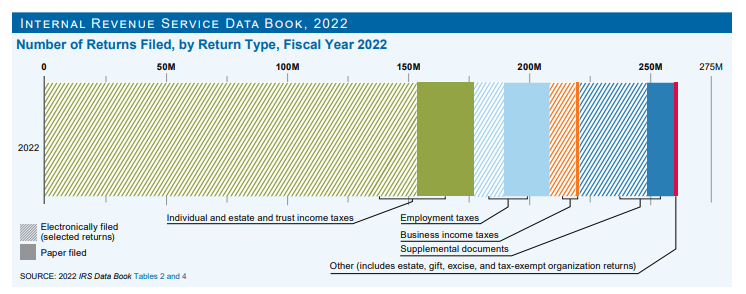 [SOURCE: IRS Data Book



 The most important thing about knowing the tax bracket is that the customer can use it to keep as much money as possible in the lower brackets. You do this by lowering their income that is taxed.